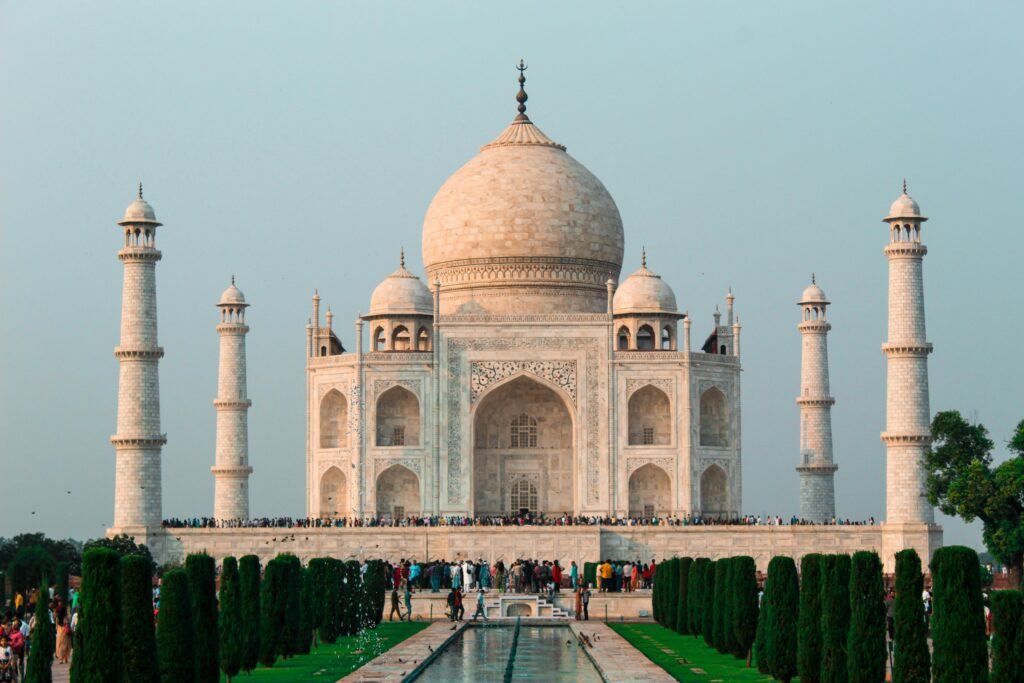
The Taj Mahal is one of the most magnificent monuments in the world and a timeless symbol of love and beauty. Located on the banks of the Yamuna River in Agra, Uttar Pradesh, India, the Taj Mahal attracts millions of visitors every year from across the globe. Recognized as one of the Seven Wonders of the World, this architectural masterpiece represents not only India’s rich history but also the eternal power of love, sacrifice, and artistic excellence. Adventure Travel Ideas
Historical Background of the Taj Mahal.
The Taj Mahal was built by the Mughal emperor Shah Jahan in memory of his beloved wife, Mumtaz Mahal. Mumtaz Mahal died in 1631 during childbirth while giving birth to their fourteenth child. Her death deeply affected Shah Jahan, and in his grief, he decided to construct a monument that would preserve her memory forever.
Construction of the Taj Mahal began in 1632 and was completed around 1653, taking nearly 22 years to finish. It is believed that over 20,000 artisans, craftsmen, and laborers worked on the project. Skilled workers were brought not only from different parts of India but also from Persia, Turkey, and Central Asia, making the Taj Mahal a truly international creation.
Architectural Brilliance .
The Taj Mahal is an outstanding example of Mughal architecture, which blends Islamic, Persian, Turkish, and Indian architectural styles. The monument is constructed primarily from white marble, sourced from Makrana in Rajasthan. This marble gives the Taj Mahal its iconic glow and elegance.
The main mausoleum stands on a raised platform and is surrounded by four tall minarets, one at each corner. These minarets are slightly tilted outward to protect the main structure in case of an earthquake. The large central dome, crowned with a finial, is one of the most striking features of the Taj Mahal and dominates its skyline. Adventure Travel Ideas
Intricate Marble Inlay Work .
One of the most fascinating aspects of the Taj Mahal is its intricate decorative work. The walls and interiors are adorned with a technique known as Pietra Dura, a form of marble inlay art. Precious and semi-precious stones such as jade, jasper, turquoise, sapphire, and coral were carefully embedded into the marble to create beautiful floral patterns and geometric designs. Adventure Travel Ideas
In addition to stone inlay, verses from the Holy Quran are inscribed on the entrance arches in elegant calligraphy. These inscriptions grow slightly larger toward the top, creating an optical illusion that maintains visual harmony when viewed from below. AdventureTravel Ideas
The Charbagh Garden and the Yamuna River.
The Taj Mahal complex includes a beautifully designed garden known as the Charbagh, which follows the traditional Mughal garden layout. The garden is divided into four equal parts by water channels, symbolizing the four rivers of paradise as described in Islamic tradition. The long reflecting pool in the center captures a stunning mirror image of the Taj Mahal, making it a favorite spot for photography.
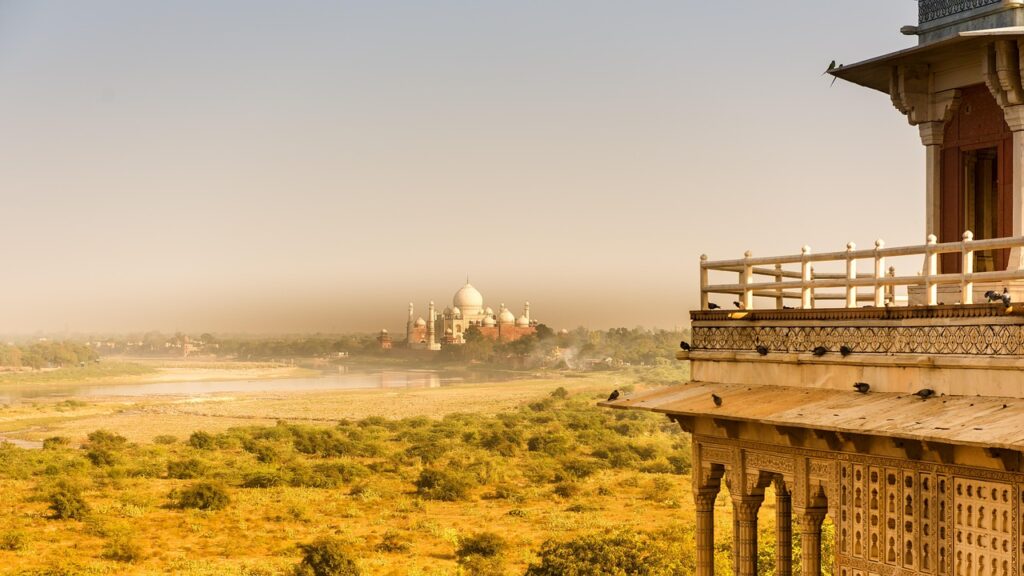
The Yamuna River flows behind the Taj Mahal and plays a crucial role in its foundation. The river helped stabilize the soil beneath the monument and enhanced the overall beauty of the site. Even today, the river remains an essential element of the Taj Mahal’s setting. Adventure Travel Ideas
Changing Colors of the Taj Mahal
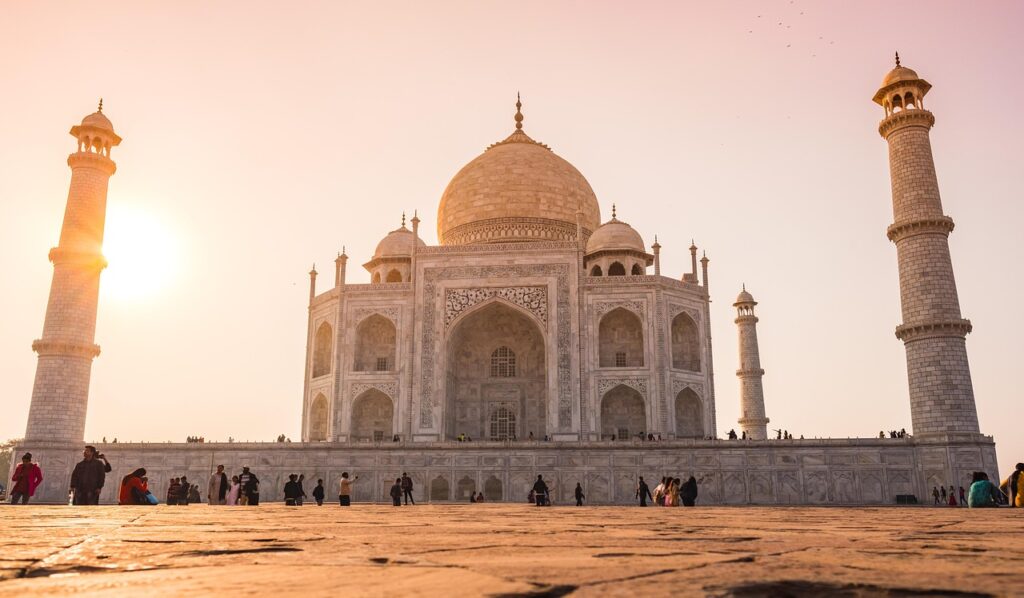
One of the most magical features of the Taj Mahal is its ability to change color throughout the day. In the early morning, it appears soft pink, reflecting the rising sun. During the daytime, it shines bright white under the sunlight, while in the moonlight, it takes on a bluish-silver glow. These color changes add a sense of mystery and romance, making every visit unique. Adventure Travel Ideas
Legends and Myths Associated with the Taj Mahal
Over the centuries, several legends have emerged around the Taj Mahal. One popular myth suggests that Shah Jahan planned to build a second Taj Mahal made of black marble across the Yamuna River, known as the “Black Taj.” However, there is no strong historical evidence to support this claim. Adventure Travel Ideas
Another widely told story is that Shah Jahan cut off the hands of the artisans after the completion of the Taj Mahal to ensure that no similar monument could ever be built again. Historians, however, consider this story to be untrue and unsupported by historical records. Adventure Travel Ideas
UNESCO World Heritage Site
In 1983, the Taj Mahal was declared a UNESCO World Heritage Site. UNESCO described it as “the jewel of Muslim art in India and one of the universally admired masterpieces of the world’s heritage.” This recognition highlights the global importance of the Taj Mahal as a cultural and historical treasure.Adventure Travel Ideas
Conservation and Environmental Challenges
Despite its grandeur, the Taj Mahal faces several environmental threats. Air pollution from nearby factories, vehicle emissions, and the decreasing water level of the Yamuna River have caused damage to its white marble, leading to discoloration and erosion.
To protect the monument, the Indian government established the Taj Trapezium Zone (TTZ), restricting industrial activity around the area. Regular cleaning and restoration efforts are also carried out. A special clay-based treatment, known as mud pack therapy, is applied to the marble to restore its natural shine and remove stains. Adventure Travel Ideas
Cultural and Global Significance
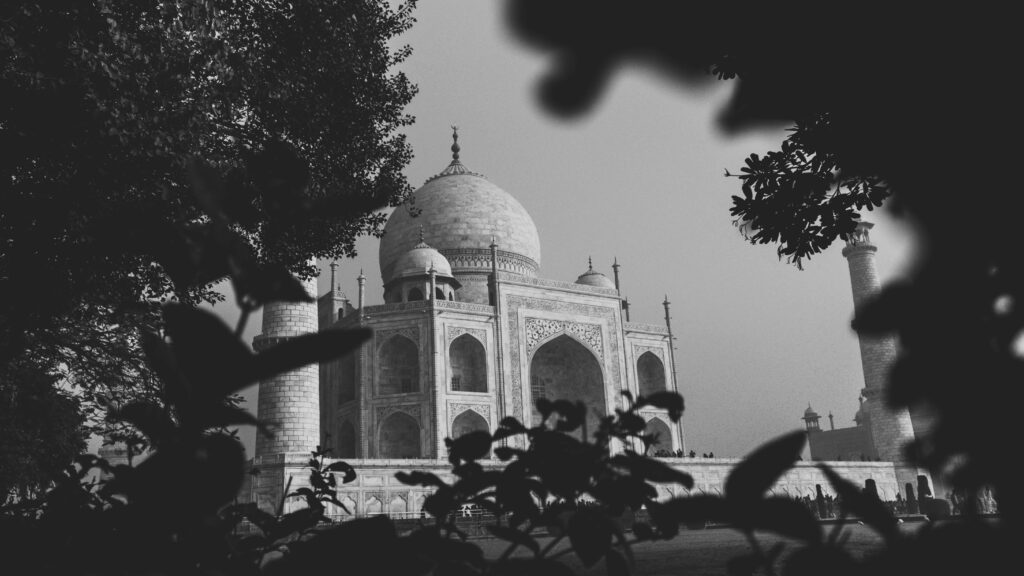
The Taj Mahal is not just a historical monument; it is a symbol of India’s cultural identity. It represents the heights of artistic achievement during the Mughal era and stands as a universal symbol of love and devotion. The monument has inspired countless poets, writers, artists, and filmmakers across generations. Adventure Travel Ideas
It also plays a significant role in India’s tourism industry, contributing greatly to the country’s economy and global image. For many people, visiting the Taj Mahal is a once-in-a-lifetime experience. Adventure Travel Ideas
Conclusion
The Taj Mahal is more than a structure made of marble; it is a story carved in stone. It tells a tale of deep love, immense loss, and extraordinary artistic vision. Even after centuries, the Taj Mahal continues to captivate hearts with its beauty, elegance, and emotional depth. Adventure Travel Ideas
As time passes, the Taj Mahal remains a shining reminder that true love can transcend life and become immortal. Preserving this monument is not only India’s responsibility but also a duty shared by the entire world, ensuring that future generations can continue to admire this wonder of human creativity and devotion. Adventure Travel Ideas
