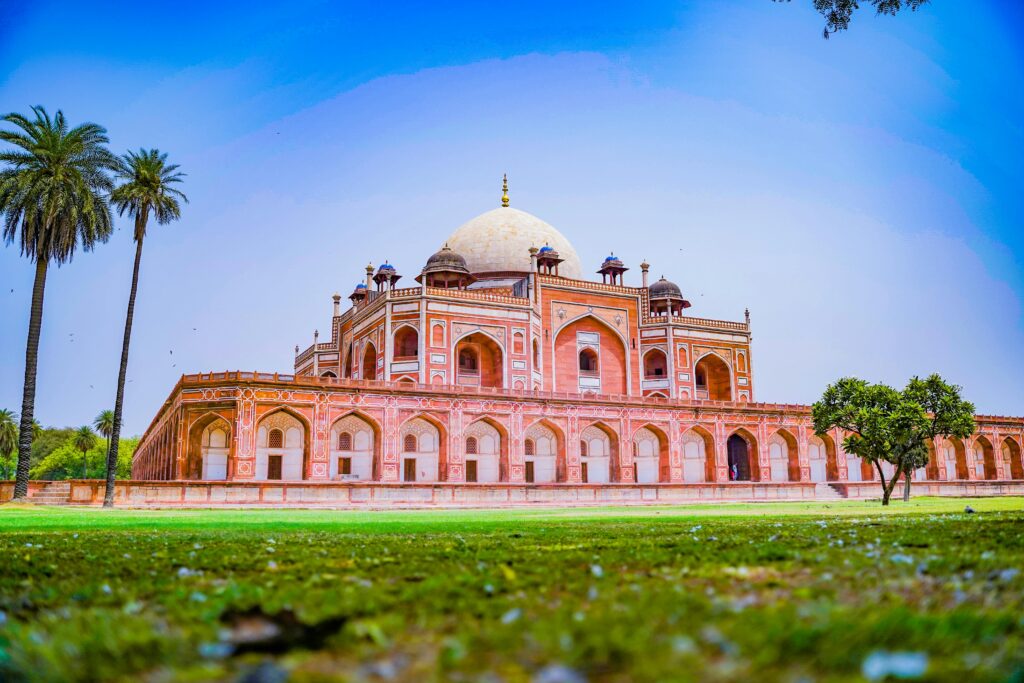
Humayun’s Tomb is one of the most iconic historical monuments in India and a masterpiece of Mughal architecture. Located in Delhi, this magnificent structure is not only the final resting place of the Mughal Emperor Humayun but also the architectural inspiration behind the world-famous Taj Mahal. Recognized as a UNESCO World Heritage Site, Humayun’s Tomb represents the beginning of grand Mughal architectural style in the Indian subcontinent by Adventure Travel Ideas.
History of Humayun’s Tomb
Humayun’s Tomb was built in 1569–1570 AD by Empress Bega Begum, the widow of Emperor Humayun. Humayun was the second Mughal emperor of India and the son of Babur, the founder of the Mughal dynasty. Adventure Travel Ideas
Humayun died in 1556 AD after falling down the stairs of his library at Purana Qila in Delhi. Following his death, his wife commissioned a grand mausoleum to honor his memory. The tomb was designed by Mirak Mirza Ghiyas, a Persian architect brought from Herat (modern-day Afghanistan).
This was the first garden tomb in India, setting a new standard for royal Mughal burial architecture.
Architectural Beauty of Humayun’s Tomb
Humayun’s Tomb is a perfect blend of Persian and Indian architectural styles. The monument is built mainly with red sandstone, highlighted with white marble, giving it a royal and elegant appearance.Adventure Travel Ideas
Key Architectural Features
- Charbagh Garden Layout
The tomb is built in the center of a large charbagh (four-part garden), divided by water channels. This design symbolizes the Islamic concept of paradise. - Double Dome Structure
Humayun’s Tomb was the first structure in India to use a double dome, which later became a hallmark of Mughal architecture. - Symmetry and Proportion
Every side of the monument looks identical, reflecting balance and harmony. - Raised Platform
The tomb stands on a high platform, enhancing its grandeur and visibility.
Humayun’s Tomb Complex
The tomb is part of a vast historical complex that includes several important structures:
Isa Khan’s Tomb
Built in 1547 AD, this octagonal tomb belongs to an Afghan noble and predates Humayun’s Tomb.
Barber’s Tomb (Nai Ka Gumbad)
Believed to be the tomb of the royal barber, though historical details remain uncertain.
Bu Halima’s Garden
An early Mughal-era garden that adds historical depth to the site.
Together, these monuments make Humayun’s Tomb complex one of the most important heritage zones in Delhi. Adventure Travel ideas
Influence on the Taj Mahal
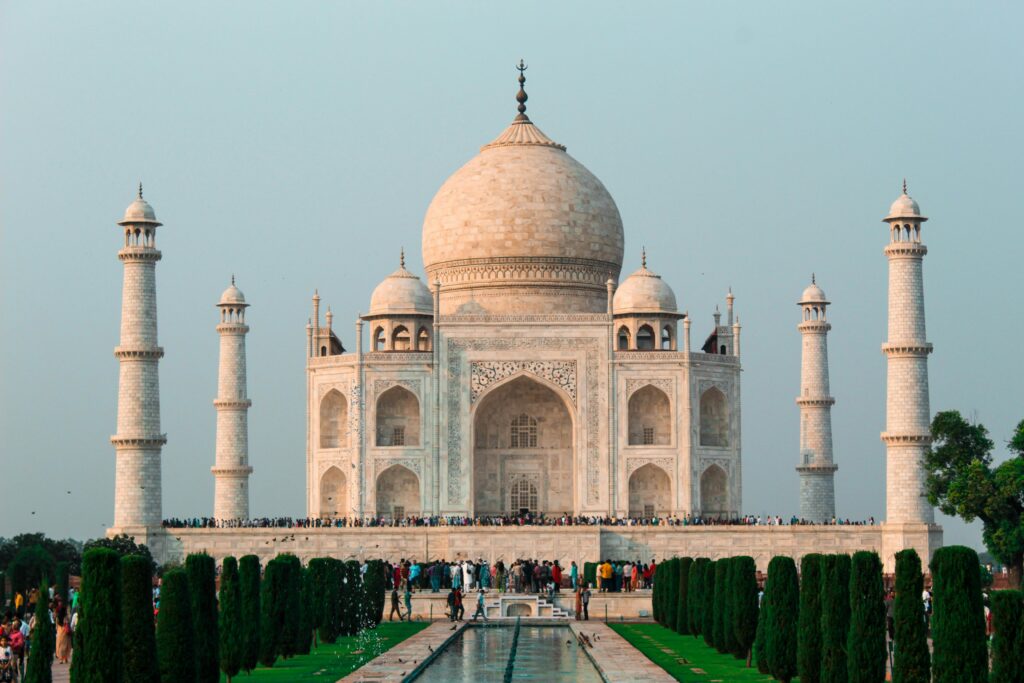
Humayun’s Tomb is often called the precursor of the Taj Mahal. Many architectural elements seen in the Taj Mahal—such as the symmetrical layout, garden setting, domed roof, and use of white marble—were first introduced here.
Without Humayun’s Tomb, the evolution of Mughal architecture in India might not have reached the iconic heights seen in later monuments. Adventure Travel Ideas
Cultural and Religious Significance
Humayun’s Tomb is more than a burial site—it represents Mughal beliefs about life, death, and the afterlife. The garden symbolizes heaven, while the flowing water channels signify eternal life.
The monument also reflects the political strength of the Mughal Empire, asserting its legitimacy during a period of instability after Humayun’s death. Adventure Travel Ideas
Restoration and Conservation
Over the centuries, Humayun’s Tomb suffered neglect and damage. Major restoration work was undertaken by the Archaeological Survey of India (ASI) with international support in the late 20th century. Adventure Travel Ideas
Traditional construction techniques were used to restore the monument, including:
- Repairing stonework
- Reviving water channels
- Replanting Mughal-style gardens
mb is more than a burial site—it represents Mughal beliefs about life, death, and the afterlife. The garden symbolizes heaven, while the flowing water channels signify eternal life.
The monument also reflects the political strength of the Mughal Empire, asserting its legitimacy during a period of instability after Humayun’s death. Adventure travel Ideas
Over the centuries, Humayun’s Tomb suffered neglect and damage. Major restoration work was undertaken by the Archaeological Survey of India (ASI) with international support in the late 20th century. Adventure Travel Ideas
Traditional construction techniques were used to restore the monument, including:
- Repairing stonework
- Reviving water channels
- Replanting Mughal-style gardens
Interesting Facts About Humayun’s Tomb
- It was the first garden tomb in India
- The design inspired the Taj Mahal
- Over 150 Mughal family members are buried in the complex
- It became a UNESCO World Heritage Site in 1993
- The tomb combines Persian, Islamic, and Indian architecture
Visitor Information & Travel Guide
Location
Nizamuddin East, New Delhi, India
Timings
- Open daily: Sunrise to Sunset
Entry Fee (Approx.)
- Indians: ₹40
- Foreign tourists: ₹600
- Free entry on World Heritage Day
Best Time to Visit
- October to March (pleasant weather)
- Early morning or late afternoon for photography
How to Reach
- Nearest Metro Station: JLN Stadium or Jor Bagh
- Easily accessible by cab, auto, or bus
Why You Should Visit Humayun’s Tomb
Humayun’s Tomb offers a peaceful escape from Delhi’s chaos while providing a deep dive into India’s Mughal history. Its gardens, architectural precision, and historical importance make it a must-visit destination for:
- History lovers
- Architecture students
- Photographers
- Tourists and travelers
Conclusion
Humayun’s Tomb stands as a timeless symbol of Mughal elegance, innovation, and cultural fusion. As the foundation of Mughal architectural brilliance, it paved the way for future masterpieces like the Taj Mahal. Even after more than 450 years, the monument continues to inspire awe and admiration.
A visit to Humayun’s Tomb is not just a journey through a historic site—it is a walk through the origins of India’s architectural legacy.
The blog is complete gyus se you soon the next blog dear’s

So I checked out dagadonc1. It’s got a certain… vibe. Give it a chance if you’re looking for something different. My take: dagadonc1.
Slotsgo11—anyone had any luck there? I’ve been trying my hand at it lately. It’s pretty fun, if you like that sort of thing. Give it a spin! slotsgo11
Slotsgo11—anyone had any luck there? I’ve been trying my hand at it lately. It’s pretty fun, if you like that sort of thing. Give it a spin! slotsgo11
Alright, a bit of the high life with taibetvip. If you’re lookin’ for something a little more upscale, might be worth checking out. See if you can snag that VIP treatment. Check out the VIP life here: taibetvip