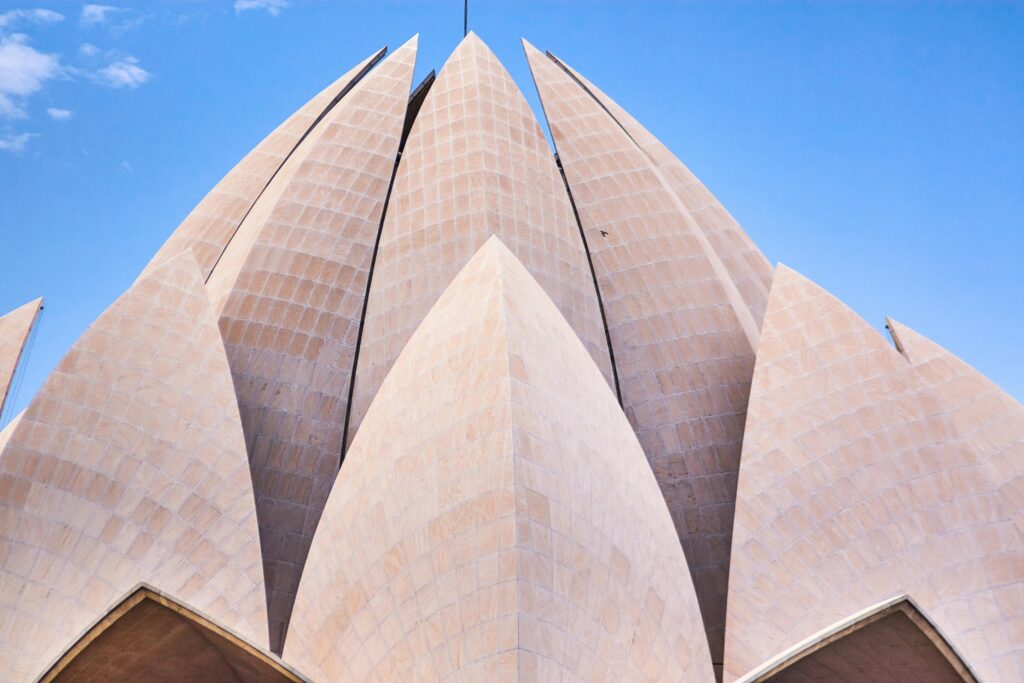
The Lotuse Temple is one of the most beautiful and peaceful places in New Delhi, India. It is also known as the Baha HOuse of Worship. This temple is famous all over the world because of its lotuse-flower-shapped design and calm environmenet. Evety year, milions of tourists and devotees visit the Lotus Temple to experience peace and silence.
The Lotus Temple is not only a religious place but also a symbol of unity, love, and harmony. People of all all religious are welcome here.
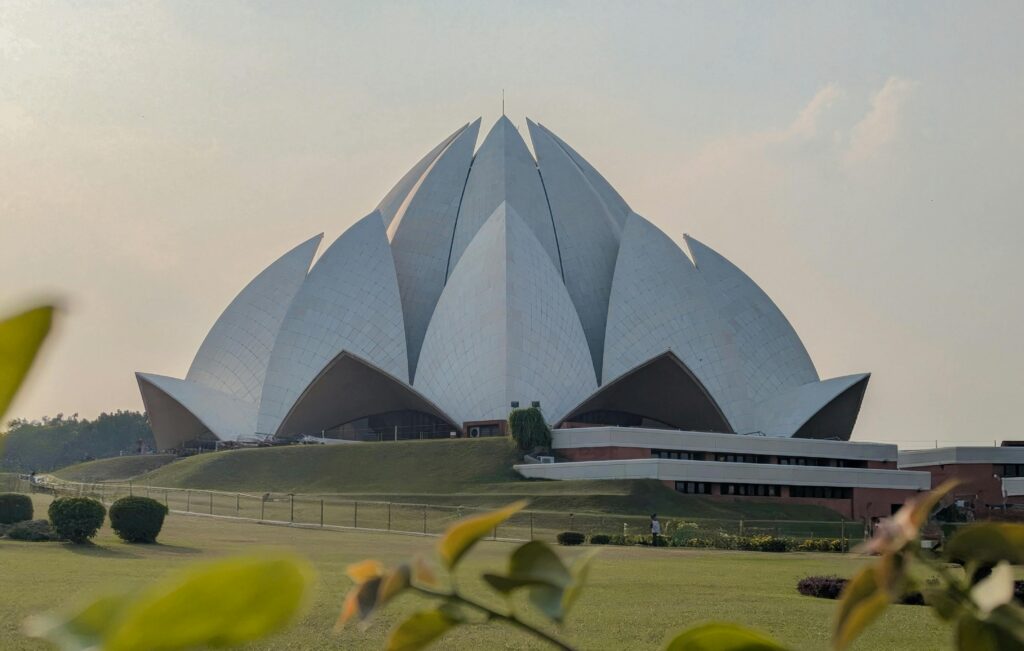
Where is Lotus Temple Located .
The Lotus Temple located in Kalkaji, South Delhi. It is close to popuar areas like Nehru Place, Kalkaji Mandir, and Okhla.
How to Reach Lotuse Temple:
- Metro: Kalkaji Mandir Metro Station (Violet Line & Magenta Line)
- Bus: DTC buses are easily available
- Cab/ Auto: Ola, Uber, and local autos are convenient
The Location is well conneted , so visitors can reach easily from ant part of Delhi. by Adventure Travel Ideas
History of Lotus Temple.
The Lotus Temple was compeleted in 1886. It was designed by an Iranan architect named Fariborz Sahba. The Temple belongs to the Baha Faith , a religioun that teaches inity of all religions and equality of all people.
The main Ideas of the Baha Faith is.
- All religions are one
- Humanity is one family
- Peace is the goal of life
Architectural Design and Inspiration
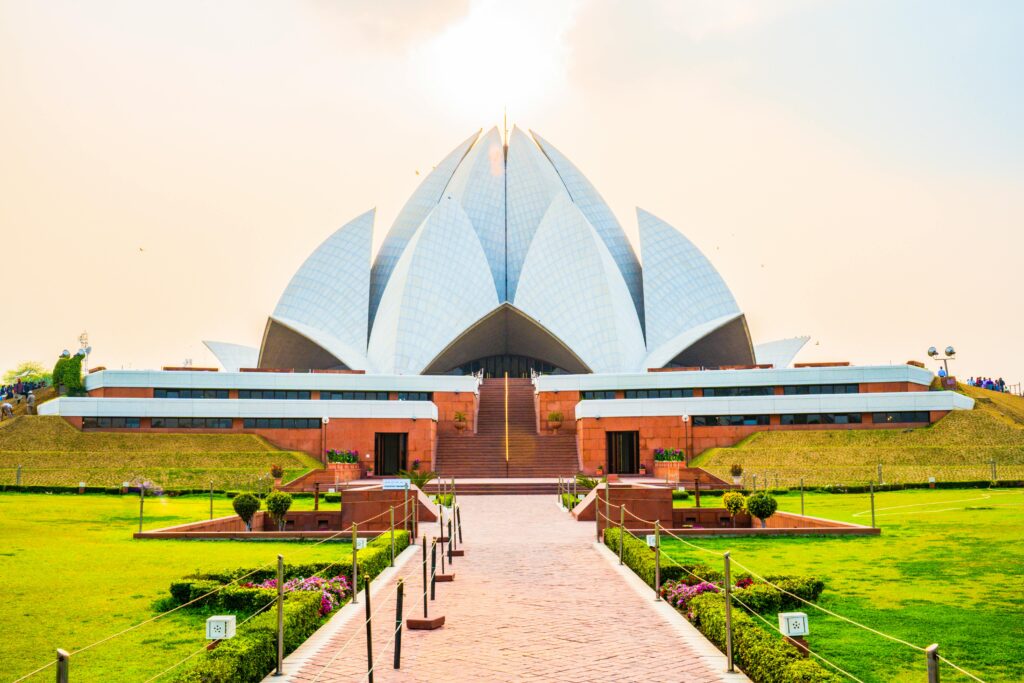
The most striking feature of the Lotus Temple is its flower-like structure. Inspired by the lotus flower—a symbol of purity, peace, and hope in many cultures—the temple appears to rise gracefully from its surroundings. The building consists of 27 free-standing marble-clad “petals” arranged in clusters of three to form nine sides. This results in a symmetrical and harmonious design that looks beautiful from every angle.
The temple was designed by Iranian architect Fariborz Sahba, who spent years conceptualizing a structure that would combine modern engineering with spiritual symbolism. The use of white marble, sourced from Greece, enhances the purity and elegance of the structure. The temple is surrounded by lush green gardens and nine reflecting pools, which further add to its serene atmosphere.
The number nine holds special significance in the Bahá’í Faith, symbolizing completeness and unity. This is why the temple has nine sides, nine entrances, and a central hall that can accommodate around 2,500 people at a time. Adventure Travel Ideas
Interior and Atmosphere
Unlike many traditional religious buildings, the interior of the Lotus Temple is remarkably simple. There are no idols, statues, images, or religious symbols inside. The hall is quiet and filled with natural light that filters through the petals above, creating a calm and peaceful environment.
Visitors are encouraged to sit in silence, meditate, or pray according to their own beliefs. No sermons or rituals are performed here. This simplicity reflects the Bahá’í principle that all paths to God are valid and that spiritual truth can be found through personal reflection.
The silence inside the temple is one of its most powerful features. In the midst of the busy and noisy city of Delhi, the Lotus Temple offers a rare opportunity to experience deep calm and inner peace. Adventure Travel Ideas
Religious and Cultural Significance
Although the Lotus Temple is a Bahá’í House of Worship, it is not limited to followers of the Bahá’í Faith. People from different religions—Hindus, Muslims, Christians, Sikhs, Buddhists, Jews, and others—visit the temple regularly. This openness makes it unique among religious structures.
The Bahá’í Faith teaches that all major religions come from the same divine source and that humanity is one family. The Lotus Temple reflects these teachings through its inclusive nature and welcoming environment. It stands as a reminder that despite differences in beliefs and traditions, people can come together in peace and mutual respect.
Gardens and Surroundings
The temple is set amidst beautifully maintained gardens spread over a large area. The greenery complements the white marble structure and enhances the feeling of tranquility. The nine pools surrounding the temple are not only decorative but also help cool the building naturally, showcasing environmentally thoughtful design. Adventure Travel Ideas
Walking through the gardens before entering the temple helps visitors slow down and mentally prepare for the quiet experience inside. The combination of nature and architecture makes the Lotus Temple a perfect place for relaxation and reflection. Adventure Travel Ideas
Environmental and Engineering Excellence
The Lotus Temple is not only architecturally impressive but also environmentally conscious. Its design allows for natural ventilation, reducing the need for artificial cooling. The surrounding pools help regulate temperature, while the structure itself maximizes the use of daylight.
The engineering behind the construction was complex, as creating a symmetrical flower-like structure using concrete and marble required advanced techniques. The successful execution of this design is considered a major achievement in modern architecture.
Global Recognition and Awards
Since its completion, the Lotus Temple has received numerous national and international awards for architectural excellence. It has been featured in books, documentaries, and architectural studies around the world. Many architects and students study the Lotus Temple as an example of how modern design can blend seamlessly with spiritual symbolism.
Its global recognition has made it one of India’s most iconic modern monuments, representing not just the country’s architectural capabilities but also its tradition of spiritual tolerance.
Visitor Experience
Visiting the Lotus Temple is a memorable experience. Entry is free, and volunteers help guide visitors while ensuring that silence and decorum are maintained. Shoes must be removed before entering the prayer hall, emphasizing respect and equality among visitors.
Photography is allowed outside the temple, where the structure looks especially stunning during sunrise and sunset. Inside, however, photography is prohibited to maintain the peaceful atmosphere.
The temple is best visited in the early morning or late afternoon to avoid crowds and to fully enjoy the calm surroundings.
Conclusion
The Lotus Temple is much more than an architectural wonder; it is a symbol of peace, unity, and hope for humanity. In a world often divided by differences, the temple stands as a reminder that harmony is possible when people come together with respect and understanding.
Its elegant lotus-inspired design, serene environment, and inclusive philosophy make it one of the most meaningful landmarks in India and the world. Whether one visits for spiritual reasons, architectural interest, or simple curiosity, the Lotus Temple leaves a lasting impression on every visitor.